Fit & proportion
How a Suit Should Fit
A suit should settle on your shoulders, follow your natural stance and leave room for ordinary movement. The jacket and trousers must work together: a close waist means little if the collar lifts, the front pulls or the trousers prevent you from sitting comfortably.
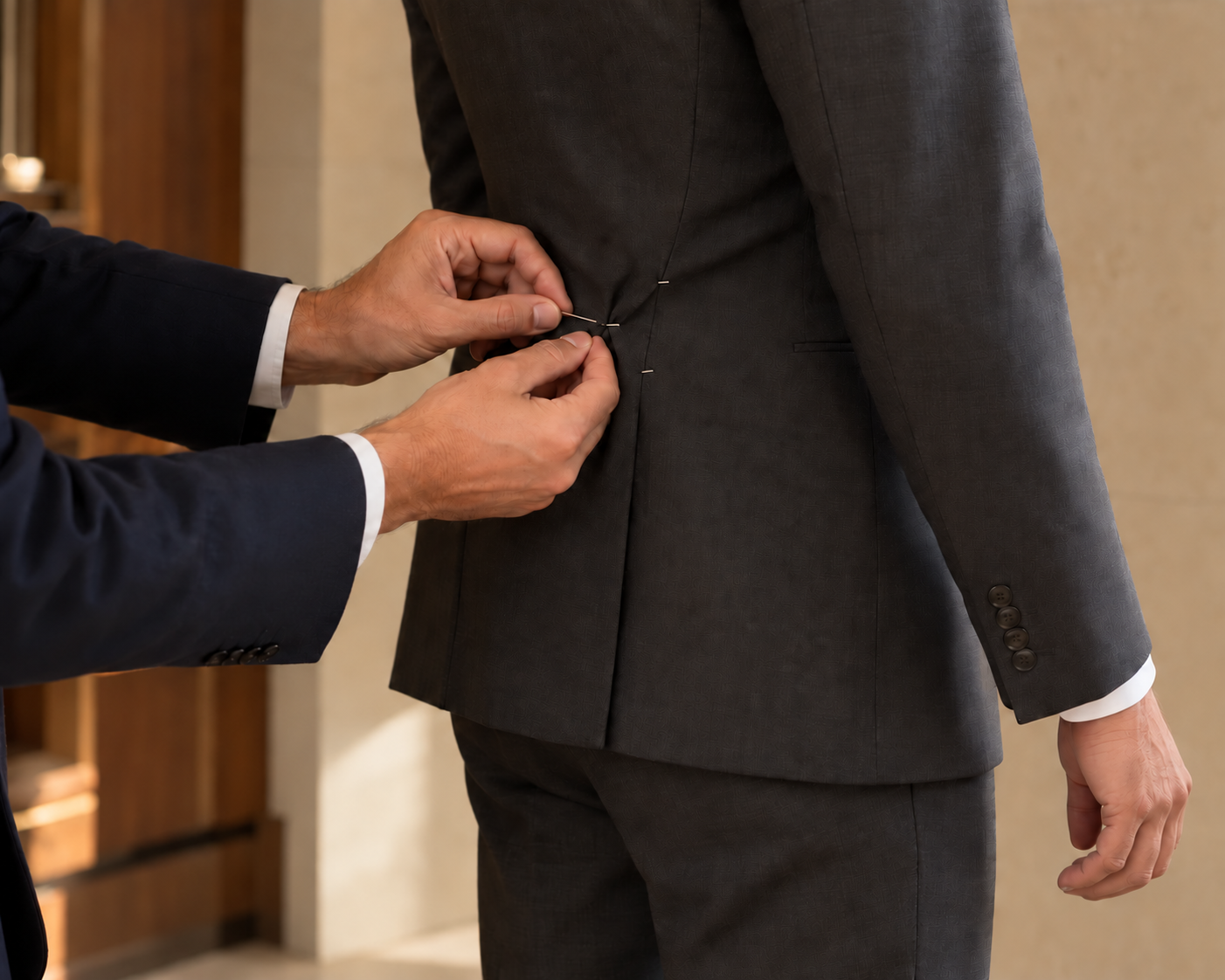
Begin with the whole silhouette
Look at the suit from several feet away before studying its details. The jacket should hang coherently from shoulders to hem, the trousers should fall from their intended waist position, and the proportions should look deliberate. A narrow sleeve or a short hem cannot compensate for an unsettled jacket.
At a fitting, stand as you usually stand. Pulling your shoulders back or holding your stomach in changes the body the clothier is trying to dress. Enzo Custom develops an individual pattern from scratch, using more than 30 measurements alongside posture, balance and differences between the two sides. The purpose is clothing that works in your natural stance.
Read fit in the right order
| Area | What to assess | What deserves a closer look |
|---|---|---|
| Shoulders | A line that supports the intended silhouette | Collapse, pulling or an unintended hollow |
| Collar and chest | Collar contact and lapels that rest cleanly | Persistent collar separation or bowed lapels |
| Waist and balance | Comfortable closure and a settled front | Strong diagonal tension or a swinging hem |
| Back and jacket length | A settled back and length proportioned to the torso and seat | Persistent folds or a hem that shifts unexpectedly |
| Sleeves and cuffs | A clean hang and a deliberate finish with the intended shirt | Twisting or uneven cuff presentation after you relax |
| Trousers | Comfortable rise, seat and thigh room | Opening pockets, dragging seat or restricted steps |
Assess these areas together before deciding where to pin or alter; a fold may begin somewhere other than where it appears.
The jacket should have shape and ease
Fasten the appropriate working button and breathe normally. The jacket can define the waist without pulling the fronts into a pronounced X. Open it before sitting, then check that reaching forward does not feel unduly restrictive. Some movement in the garment is normal; tailoring is not expected to remain motionless when the body moves.
Shoulder width and slope establish the upper outline. Front and back balance determine how that outline hangs over your stance. Once these relationships are sound, the clothier can refine waist suppression, jacket length and sleeve shape with a clearer view of the result.
The shirt also matters. Wear a suitable one to assess collar contact and sleeve presentation. There is no single cuff exposure that overrides your proportions and preference, but both sleeves should be evaluated deliberately.
Give the trousers equal attention
Place the waistband where it is designed to sit before judging length. Pulling trousers lower changes the apparent rise, seat and hem at once. Sit in them, take a normal step and check that the thigh has enough room for daily use.
The trouser fitting guide explains why rise, seat and leg shape must be resolved before the final hem. The shoe then helps determine the break: a clean finish, a slight interruption or a fuller fall can each be intentional.
Common suit fit concerns
Use the table below to locate a concern and understand what your clothier will examine on your body.
| What you notice | Areas that may need assessment | Read next |
|---|---|---|
| Divot near the sleeve head | Shoulder shape, sleeve setting and construction | Shoulder fit |
| Gap behind the collar | Neckline, shoulder slope and upper-body balance | Collar contact |
| Strong X at the button | Waist room, front balance and button position | Jacket balance |
| Folds below the collar | Neck shape, shoulders and back length | Posture and balance |
| Tension across the blades | Back shape, width and movement allowance | Jacket balance |
| Twisting sleeve at rest | Sleeve orientation, shape and arm position | Sleeve pitch |
| Lapel lifting or rippling | Chest room, balance and internal support | Jacket construction |
| Jacket climbs during ordinary movement | Armhole, sleeve, ease and surrounding pattern | Shoulder relationships |
| Trousers pull, pool or gape | Waist position, rise, seat, leg shape and hem | Trouser fit |
For a persistent concern, alterations and repairs explains why the actual cloth, construction and available seam allowance determine the work that can be done.
Set your preferred silhouette
Bring examples of what you like, but explain the practical detail behind them. “Close through the waist with more room across the back” is more useful than “slim everywhere.” Tell your clothier if you spend long days seated, move between climates or prefer a more generous silhouette.
Our process usually involves two to three fittings. Review your suit choices, then use your appointment at an Enzo showroom to establish the fit you want repeated in future orders.
Fit
- Jacket Balance and Posture
- Suit Shoulder Fit
- Collar Gap and Sleeve Pitch
- Suits for an Athletic Build
- Suits for Tall and Short Men
- How Trousers Should Fit
- How a Shirt Should Fit
Questions and answers
Should a suit feel tight when new?
It should feel shaped, not restrictive. Persistent pressure, difficult closure or limited ordinary movement should be discussed at the fitting rather than accepted as something that must settle.
Can every wrinkle be removed?
Cloth moves with the body. The aim is a clean, balanced appearance at rest and comfortable movement, not a garment that stays completely smooth in every position.
Should I bring my usual shoes?
Yes, especially for the trouser fitting. The shape and height of the shoe affect how the hem falls and help you judge the break accurately.
Is a shorter jacket always more flattering?
No. Jacket length relates to torso, seat coverage, button position and the trouser line. The right length is a proportion decision rather than a universal short or long rule.
Continue reading
Everything we make is cut for one man.
Always custom. Never off the rack.
Book a Private Appointment